
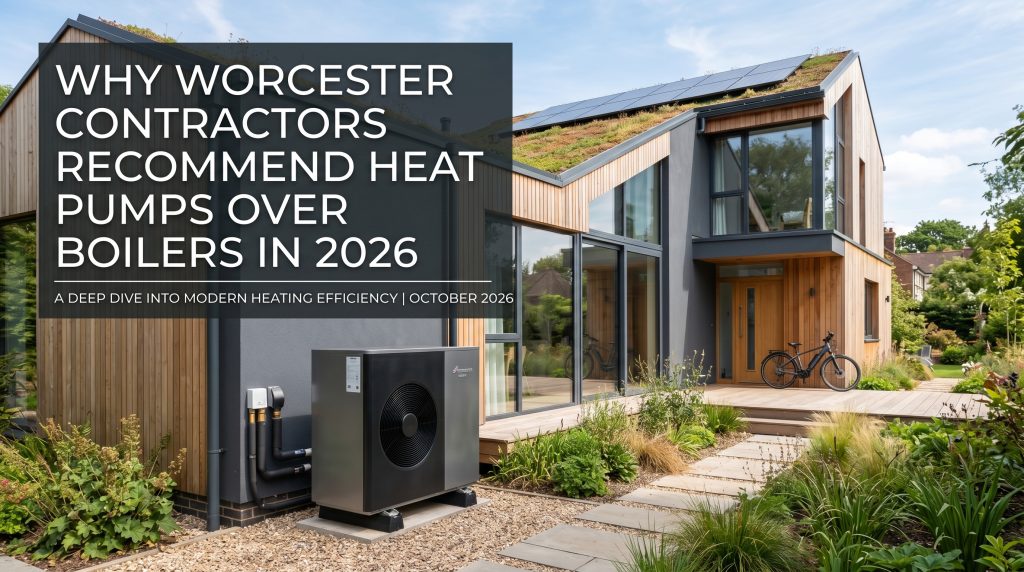
Why Worcester Contractors Recommend Heat Pumps Over Boilers in 2026
If you’ve talked to an HVAC contractor in Worcester recently about replacing an aging boiler, there’s a good chance the conversation steered toward heat pumps. This isn’t a sales gimmick or a passing trend – it reflects a real shift in the heating and cooling landscape for Massachusetts homeowners, driven by a combination of improved technology, substantial state incentives, and the practical limitations of boiler-only heating in 2026.
In this guide, we’ll walk through exactly why heat pumps have become the recommendation of choice for so many Worcester-area contractors this year – covering the technology improvements that changed the cold-climate conversation, the Mass Save incentive programs reshaping the cost equation, and the practical tradeoffs homeowners should understand before making a decision.
If you’re considering a heating system change for your Worcester home, contact our team at EddyTech Mini Splits Solutions for a personalized assessment of your options.
The Boiler’s Long History in Worcester Homes
Boilers have been a fixture of New England heating for generations, and for good reason – they’re a familiar, time-tested technology for distributing heat through radiators, baseboards, or radiant flooring. Many Worcester homes, particularly older housing stock, were built around boiler-based heating systems, often fueled by oil.
That history is part of why the shift toward heat pumps feels notable. It’s not that boilers have suddenly become unreliable or unsafe – properly maintained boilers can serve a home for many years. Rather, the calculus around cost, efficiency, and available alternatives has changed significantly, especially heading into 2026.
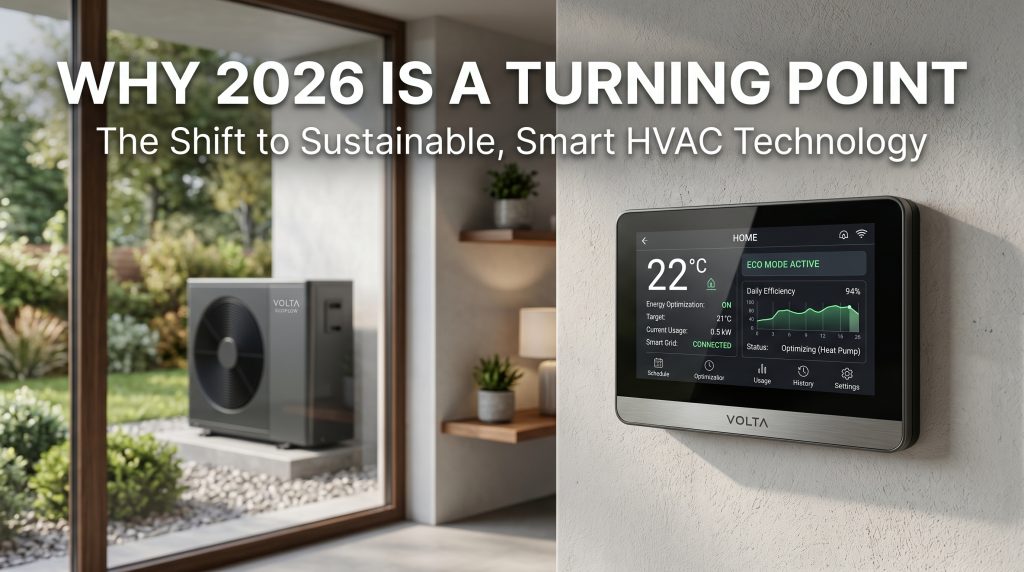
Why 2026 Is a Turning Point
Several factors are converging in 2026 that have shifted the recommendation calculus for Worcester contractors:
- Mass Save’s 2026 heat pump rebate program offers up to $2,650 per ton (capped at $8,500) for whole-home systems
- A 0% interest HEAT Loan of up to $25,000 is available to help eligible homeowners finance installations
- Discounted electric rates for heat pump households are rolling out across participating utilities, including service areas covering Worcester
- The federal 25C tax credit for heat pumps expired at the end of 2025, making Mass Save’s state-level incentives the primary – and very substantial – financial lever now available
- Cold-climate heat pump technology has matured to the point where ENERGY STAR Cold Climate certified equipment reliably handles New England winters
Taken together, these factors mean that for many homeowners, the financial and practical case for choosing a heat pump over a boiler replacement is stronger in 2026 than it’s been in previous years – which is reflected directly in what contractors are recommending.
Heat Pumps Do What Boilers Can’t: Heat AND Cool
Perhaps the single most cited reason contractors bring up heat pumps in boiler-replacement conversations is simple: a heat pump provides both heating and cooling from one system, while a boiler provides heating only.
For homeowners who currently rely on window units, older central air, or no cooling at all, a heat pump conversion – whether a ducted system or a ductless mini-split – effectively solves two problems with one investment. Compare that to a like-for-like boiler replacement, which addresses heating only and leaves cooling as a separate consideration and expense.
This dual-function capability is especially relevant for Massachusetts, where summers have become noticeably warmer and more humid in recent years, making reliable cooling something more homeowners are prioritizing rather than treating as optional.
The Mass Save Incentive Landscape for 2026
Massachusetts has built one of the most generous heat pump incentive structures in the country, and 2026’s program continues that trend with a tiered approach designed to fit different homeowner situations:
- Whole-Home tier: For systems that replace your primary heating source entirely, qualifying for up to $2,650 per ton, capped at $8,500
- Partial-Home tier: For homeowners adding a heat pump alongside an existing boiler or furnace that remains in place, qualifying for up to $1,125 per ton, capped at $8,500
- Basic tier: For installations not displacing fossil fuel or electric resistance heat, qualifying for up to $250 per ton, capped at $2,500
On top of these base tiers, additional bonuses are available – including a $500 weatherization bonus for completing a Home Energy Assessment and recommended improvements, and a $500 sizing bonus for partial-home installations that include a proper Manual J load calculation. Households at or below 60% of the Area Median Income may even qualify for a complete heat pump system at no cost.
Because these programs are structured by tiers and bonuses – and because program budgets can be allocated and exhausted within a given year – working with a contractor who understands the current Mass Save landscape is essential to capturing the full value available. You can review official program details directly through Mass Save’s residential heat pump page.
The Refrigerant Shift: Why R-410A Systems Are Out
One important technical detail that’s shaping 2026 recommendations: as of January 1, 2026, systems using R-410A refrigerant were removed from the Mass Save Qualified Products List. Only equipment using next-generation refrigerants – such as R-32 or R-454B – now qualifies for rebates.
This matters because it affects which specific heat pump models contractors can recommend if rebate eligibility is part of the plan. It’s also a reminder that the heat pump landscape continues to evolve, and equipment that may have been a strong recommendation a couple of years ago might not align with current program requirements – another reason working with a contractor who stays current on these changes matters.
Cost Comparison: What Homeowners Are Actually Seeing
Upfront cost is often the first question homeowners ask when comparing a boiler replacement to a heat pump system. While a like-for-like boiler swap might fall in a lower initial price range, a whole-home heat pump system installation often starts at a meaningfully higher upfront figure before incentives are applied.
That gap narrows substantially once Mass Save rebates (up to $8,500) and 0% HEAT Loan financing are factored in. For many homeowners, the after-rebate cost difference becomes much smaller – and when you add in the value of gaining cooling capability (which would otherwise require a separate AC purchase) and the discounted electric rates now available to heat pump households, the overall financial picture often favors the heat pump option more than the sticker prices alone would suggest.
Every home is different, though, and the only way to get an accurate comparison is through a proposal based on your specific home’s heating load, current system condition, and the rebate tier you’d qualify for. Reach out to our team for a personalized cost breakdown.
Cold-Climate Performance: Addressing the Biggest Hesitation
For years, the most common objection to heat pumps in New England was a reasonable one: “Will it actually keep my house warm during a real Massachusetts winter?” Older heat pump technology genuinely struggled with this, which is part of why boilers remained the default recommendation for so long.
That objection has lost much of its force with modern cold-climate heat pumps. ENERGY STAR Cold Climate certified equipment – the standard required for Mass Save’s 2026 rebate-eligible products – is specifically tested and designed to maintain strong heating output at low outdoor temperatures. This is the technological shift that underlies much of the change in contractor recommendations: the cold-climate performance gap that used to favor boilers has substantially closed.
For homeowners who remain cautious, a partial-home approach – adding a heat pump while retaining the existing boiler as backup – offers a way to gain the benefits of a heat pump (efficiency, cooling, lower operating costs in most conditions) while keeping a familiar fallback for extreme cold snaps.

Whole-Home vs. Partial-Home: How Contractors Decide Which to Recommend
Not every Worcester home is a candidate for the same approach, and a responsible contractor will base their recommendation on your home’s specific situation rather than a one-size-fits-all answer. Key factors include:
- The condition and layout of any existing ductwork (or lack thereof)
- Your home’s insulation and air-sealing, which affects total heating load
- Your current heating fuel, system age, and condition
- Whether you want to fully replace your boiler or are more comfortable with a phased, partial approach
- Which Mass Save rebate tier best fits your goals and budget
For homes without ductwork, a ductless mini-split system – configured as either a whole-home or partial-home solution – is often the most practical path, since it avoids the cost and disruption of adding new ductwork. For homes with good existing ductwork, a ducted heat pump replacement may integrate more seamlessly.
What This Means for Worcester Homeowners Right Now
If you’re weighing whether to replace an aging boiler with like-for-like equipment or make the switch to a heat pump, 2026 presents a particular set of conditions worth understanding: substantial Mass Save rebates, 0% financing, discounted heat pump electric rates rolling out across the region, mature cold-climate technology, and no federal tax credit to offset a boiler-only replacement in the way it might have a couple of years ago.
None of this means a heat pump is automatically the right choice for every home – but it does explain why so many contractors are leading with heat pump recommendations this year, and why it’s worth getting a heat-pump-inclusive proposal even if you started the conversation thinking “I just need a new boiler.”
If you’re in Worcester, MA or the surrounding communities – including Shrewsbury, Westborough, Auburn, Millbury, Grafton, Northborough, Marlborough, Hudson, Hopkinton, Leominster, or Fitchburg – and want to explore your options, contact EddyTech Mini Splits Solutions LLC or call us at (774) 431-2298. You can also learn more about our team, browse our full range of HVAC services, or explore more HVAC guides on our blog.
Frequently Asked Questions: Heat Pumps vs. Boilers in 2026
Below are answers to common questions homeowners search for when comparing heat pumps to boilers, including current Massachusetts incentive details.
Are heat pumps really better than boilers for Massachusetts homes?
For many Massachusetts homes, modern cold-climate heat pumps offer a compelling combination of efficiency, added cooling capability, and strong state incentives that boilers can’t match – though the right choice depends on your home’s insulation, ductwork, and heating needs.
Why are Worcester contractors recommending heat pumps in 2026?
Several factors converge in 2026: improved cold-climate heat pump technology, generous Mass Save rebates specifically for heat pumps, the ability to add cooling alongside heating, and rising costs associated with oil and propane boiler fuel.
What is the Mass Save whole-home heat pump rebate for 2026?
For 2026, Mass Save offers up to $2,650 per ton for whole-home heat pump systems that replace your primary heating source, capped at a maximum of $8,500.
Is the federal tax credit for heat pumps still available in 2026?
No. The federal 25C energy efficiency tax credit for residential heat pumps expired at the end of 2025 and is not available for 2026 installations. Massachusetts homeowners now rely primarily on Mass Save incentives.
Can I keep my boiler and add a heat pump?
Yes. Mass Save’s partial-home rebate tier is designed for homeowners who want to add a heat pump alongside an existing boiler or furnace, offering up to $1,125 per ton (capped at $8,500) for this configuration.
What does ‘whole-home’ vs. ‘partial-home’ heat pump mean for rebates?
A whole-home heat pump system replaces your primary heating source entirely and qualifies for the highest rebate tier. A partial-home system supplements an existing boiler or furnace, which remains in place, and qualifies for a lower (but still substantial) rebate tier.
Do heat pumps work as well as boilers in cold New England winters?
Modern cold-climate heat pumps, particularly those on the Mass Save Qualified Products List, are specifically designed and tested to maintain strong heating output in sub-freezing temperatures typical of Worcester winters.
Are boilers more reliable than heat pumps?
Both technologies can be reliable when properly sized, installed, and maintained. Boilers have a long track record in New England, but modern heat pump technology – especially cold-climate-rated cold-climate equipment – has matured significantly and is widely used in similar climates.
How much does it cost to replace a boiler with a heat pump?
Costs vary widely based on home size, number of zones, ductwork situation, and equipment selected, but a whole-home heat pump system installation is often estimated to start in the range of $12,000 before incentives, with Mass Save rebates and financing significantly reducing the net cost.
What is the 0% HEAT Loan?
The Mass Save 0% HEAT Loan is an interest-free financing option available to eligible Massachusetts homeowners for qualifying heat pump installations, with loan amounts up to $25,000 in 2026, helping offset upfront costs alongside rebates.
Do oil boilers cost more to run than heat pumps?
Massachusetts households spend significantly more on heating than the national average, and oil prices have historically been volatile. Many homeowners switching from oil boilers to efficient heat pumps see reduced overall heating costs, particularly when combined with Mass Save’s discounted heat pump electric rates.
What refrigerants are required for Mass Save rebate eligibility in 2026?
As of January 1, 2026, R-410A systems were removed from the Mass Save Qualified Products List. Only systems using next-generation refrigerants such as R-32 or R-454B are now eligible for rebates.
Can low-income households get a free heat pump in Massachusetts?
Households earning at or below 60% of the Area Median Income (AMI) may qualify for a complete heat pump system – including equipment, installation, and necessary electrical work – at no cost through Mass Save’s income-eligible pathway.
What is a Manual J load calculation and why does it matter for rebates?
A Manual J load calculation analyzes a home’s insulation, air infiltration, window types, and orientation to determine its exact heating and cooling needs. It’s required for the Mass Save whole-home rebate tier and also unlocks a $500 sizing bonus.
Do heat pumps eliminate the need for fuel deliveries?
A whole-home heat pump system that fully replaces a boiler eliminates the need for oil or propane deliveries entirely, since heat pumps run on electricity. Partial-home systems may still require fuel deliveries for the remaining boiler use.
Will switching from a boiler to a heat pump increase my electric bill?
Heating costs shift from fuel-based billing to electricity, but Mass Save offers discounted electric rates for heat pump households in many service territories starting in 2026, which helps offset the increased electric usage.
What is the discounted heat pump electric rate in Massachusetts?
Starting in 2026, participating utilities across Massachusetts – including service areas covering Worcester, Newton, Plymouth, and Waltham – offer a discounted electric rate specifically for households using heat pumps, automatically applied when enrolled through Mass Save.
Are boilers being phased out in Massachusetts?
Boilers are not banned, and homeowners can continue to use and maintain existing boilers. However, state incentive programs and climate policy increasingly favor heat pump adoption, which is part of why contractors are recommending them more frequently.
How long does a typical boiler last compared to a heat pump?
Both boilers and heat pumps commonly last in the range of 12 to 20+ years depending on the equipment type, usage, and maintenance, with boilers sometimes lasting on the longer end of that range and heat pumps commonly in the 12 to 15 year range, though high-quality units can exceed this.
Can a heat pump provide both heating and cooling, unlike a boiler?
Yes. This is one of the most cited reasons contractors recommend heat pumps: a single heat pump system provides both efficient winter heating and summer cooling, while a boiler provides heating only and requires a separate AC system for cooling.
What’s the difference between a boiler and a furnace?
A boiler heats water or produces steam that’s circulated through radiators, baseboards, or radiant flooring to heat a home. A furnace heats air directly and distributes it through ductwork. Both are combustion-based systems, distinct from electric heat pumps.
Can heat pumps work with existing radiators or baseboard heat?
Standard air-source heat pumps used in most residential installations – including ducted and ductless mini-split systems – typically don’t connect directly to existing hydronic (water-based) radiators or baseboards. Homeowners with these systems often consider mini-splits as a parallel or replacement system rather than direct integration, though some specialized heat pump products are designed for hydronic applications.
Is it better to replace an old boiler proactively or wait until it fails?
Replacing an aging boiler proactively allows homeowners to plan the transition, take advantage of current rebate programs (which can change from year to year), and avoid emergency replacement costs and discomfort during a system failure, often in the middle of winter.
What is ENERGY STAR Cold Climate certification?
ENERGY STAR Cold Climate is a certification for heat pumps that meet enhanced efficiency and performance standards specifically for cold-weather operation. Mass Save requires this certification for rebate-eligible equipment in 2026.
Do heat pumps require more maintenance than boilers?
Both systems require regular maintenance. Heat pumps typically need filter changes, outdoor unit clearing, and annual professional tune-ups, while boilers require annual servicing, combustion safety checks, and component inspections. Neither is inherently more maintenance-intensive than the other.
What happens to my old boiler if I switch to a whole-home heat pump?
In a whole-home replacement, the existing boiler is typically decommissioned and removed (or left in place but disconnected, depending on the project), since the heat pump becomes the home’s primary heating source.
Are there safety benefits to switching from a boiler to a heat pump?
Heat pumps don’t involve on-site combustion, which eliminates risks associated with fuel storage, combustion byproducts, and the need for flue/venting systems that boilers require – though properly maintained boilers with working safety devices are designed to operate safely.
How does humidity control compare between heat pumps and boilers?
Boilers provide heating only and have no effect on summer humidity. Heat pumps, when used for cooling, actively dehumidify indoor air as part of normal operation – an added benefit boilers simply don’t offer.
What size heat pump do I need to replace my boiler?
Sizing depends on your home’s heating load, which is determined through a Manual J load calculation that considers square footage, insulation, windows, and other factors – not simply matching the BTU output of your old boiler.
Can a heat pump heat a home with poor insulation?
Heat pumps can heat homes with poor insulation, but the system will need to work harder and may be less cost-effective. Many homeowners pair a heat pump transition with weatherization improvements, which Mass Save also offers bonus incentives for.
What is the Mass Save weatherization bonus?
A $500 weatherization bonus is available for customers who complete a Home Energy Assessment and install recommended weatherization measures within a specified window before or after a partial-home heat pump installation.
Do all Worcester-area utilities participate in Mass Save?
Mass Save is a collaborative of Massachusetts utilities and is widely available across the state, including in Worcester and surrounding communities, though specific program details and discounted rates can vary by utility provider.
What is the Mass Save sizing bonus?
A $500 sizing bonus is available to customers receiving a partial-home rebate who install heat pumps sized to meet their home’s total heating needs, encouraging properly sized systems even in partial installations.
Is it worth getting multiple quotes when comparing heat pumps to a boiler replacement?
Yes. Because both equipment costs and rebate eligibility can vary based on the specific products and configuration proposed, getting multiple quotes – and confirming each contractor is part of the Mass Save Heat Pump Installer Network – helps ensure accurate comparisons.
What’s the deadline for 2026 Mass Save heat pump rebates?
Equipment must generally be installed within the 2026 program year, with rebate forms and documentation due by February 28, 2027 – though program budgets can be exhausted before that deadline, so earlier applications are recommended.
Can I install a heat pump myself to save money?
No. Proper heat pump installation – including refrigerant handling, electrical work, and system commissioning – requires a licensed HVAC professional, and Mass Save rebates require installation by a contractor in their Heat Pump Installer Network.
Do heat pumps make noise that boilers don’t?
Modern variable-speed heat pumps, especially mini-splits, are designed to operate quietly, though they do have an outdoor unit that produces some operational sound, which boilers (being entirely indoor, with combustion noise) don’t have in the same way.
What’s the environmental difference between a boiler and a heat pump?
Boilers burn fossil fuels (oil, gas, or propane) on-site, producing direct emissions. Heat pumps run on electricity and produce no on-site combustion emissions, with their overall environmental impact depending on the electricity grid’s energy sources – which in Massachusetts includes a growing share of renewables.
Will my homeowner’s insurance change if I remove an oil boiler?
Some insurers may adjust premiums based on the presence or absence of oil storage tanks, since underground or aging oil tanks can be a liability concern. It’s worth checking with your insurance provider when planning a heating system transition.
Can heat pumps handle a Massachusetts home’s hot water needs too?
Standard space-heating heat pumps (ducted or ductless) don’t typically provide domestic hot water, but heat pump water heaters are a separate product category, and Mass Save offers a separate rebate (around $750 in 2026) for qualifying heat pump water heaters.
Is propane a better fuel than oil for boilers?
Both oil and propane are fossil fuels with associated delivery costs and price volatility. Neither offers the efficiency advantages or rebate eligibility that heat pumps do under current Massachusetts incentive programs.
What’s the typical timeline for a heat pump installation project?
Timelines vary based on project scope, contractor availability, and whether a Manual J calculation and Home Energy Assessment are needed first, but homeowners should generally plan for the process – from initial assessment to completed installation – to take several weeks, particularly during high-demand seasons.
Do I need a permit to replace a boiler with a heat pump?
In most Massachusetts municipalities, HVAC system changes including heat pump installations require permits and inspections, which a licensed installer typically handles as part of the project.
Can a heat pump be added in stages, room by room?
Yes. This is essentially how partial-home and single-zone installations work – homeowners can add mini-split zones to specific rooms over time while keeping their existing boiler, then potentially transition to a whole-home system later.
What is a ‘cold climate’ heat pump exactly?
A cold climate heat pump is a heat pump model specifically engineered – typically with variable-speed compressors and enhanced refrigerant management – to maintain efficient heating output at low outdoor temperatures, and is the equipment type required for Mass Save’s 2026 rebate-eligible products list.
Are ductless mini-splits eligible for the same rebates as ducted heat pumps?
Yes, both ducted central heat pump systems and ductless mini-split configurations can qualify for Mass Save’s whole-home, partial-home, or basic rebate tiers, depending on the scope of the installation and whether they meet equipment requirements.
How do I know if my contractor is part of the Mass Save Heat Pump Installer Network?
Mass Save maintains information on participating contractors, and homeowners can confirm network participation directly with their chosen installer or through Mass Save’s official resources before finalizing a project.
What happens if my new heat pump system doesn’t pass a Mass Save inspection?
Some projects are selected for random inspection to verify program compliance. If selected, the inspection must be scheduled for the rebate to be processed; issues identified would typically need to be addressed before the rebate is finalized.
Is geothermal a better option than air-source heat pumps for replacing a boiler?
Geothermal (ground-source) heat pumps can offer very high efficiency and have their own strong Mass Save incentive pathway, but they typically involve higher installation costs and more site work (such as ground loops) compared to air-source heat pumps or mini-splits.
Do heat pumps lose value over time the way some appliances do?
Heat pumps, like other major home systems, depreciate over their service life, but a well-maintained, efficient heating and cooling system can be a positive factor for home value and marketability, particularly given rising interest in energy-efficient homes.
What’s the difference between AFUE and HSPF2 when comparing a boiler to a heat pump?
AFUE (Annual Fuel Utilization Efficiency) measures how efficiently a boiler converts fuel into heat, expressed as a percentage. HSPF2 measures a heat pump’s heating efficiency relative to electricity consumed. The two metrics use different scales and aren’t directly comparable without further conversion.
Can a heat pump struggle during a Massachusetts cold snap?
Cold-climate-rated heat pumps are designed to maintain heating capacity during cold snaps, though like any heating system, performance can be affected by extreme conditions, proper sizing, and maintenance. Some homeowners with partial-home setups retain a boiler as backup for extreme cold.
How do contractors determine whether a home is a good fit for a whole-home heat pump?
Contractors typically evaluate the home’s insulation and air sealing, existing ductwork or distribution system, square footage and layout, current heating fuel and costs, and the homeowner’s goals (such as adding cooling) before recommending a whole-home versus partial-home approach.
What’s the role of electrical panel capacity in a heat pump conversion?
Whole-home heat pump systems, especially those replacing a boiler entirely, may require adequate electrical panel capacity to support the new equipment. An electrical assessment is often part of the project scope, and any necessary upgrades should be planned for in the budget.
Are there financing options besides the Mass Save HEAT Loan?
Some manufacturers, contractors, and financial institutions offer additional financing options for HVAC upgrades, which homeowners can explore alongside the Mass Save 0% HEAT Loan to find the best fit for their budget.
Do heat pumps perform differently in a multi-family home versus a single-family home?
Heat pump systems can be configured for both single-family and multi-family properties, with multi-zone or multiple-unit configurations allowing independent control – though the specific approach and rebate structure may differ based on property type and ownership.
What questions should I ask a Worcester contractor before choosing heat pump over boiler replacement?
Useful questions include whether they’re part of the Mass Save Heat Pump Installer Network, what Manual J results suggest for sizing, which rebate tier the proposed system qualifies for, what the SEER2 and HSPF2 ratings are, and how the proposal compares for both upfront and long-term costs versus a boiler replacement.
Is now a good time to switch from a boiler to a heat pump in Worcester?
With 2026 Mass Save rebates offering up to $8,500 for whole-home systems, 0% financing options, discounted heat pump electric rates rolling out, and mature cold-climate heat pump technology, many of the conditions contractors point to as favorable for switching are currently in place – though rebate budgets can be limited, so timing matters.
Can I get a personalized recommendation for my Worcester home?
Yes. A local HVAC provider familiar with Massachusetts homes, Mass Save program details, and Worcester-area climate conditions can assess your specific home and provide a tailored recommendation on heat pump versus boiler options.
Get a Personalized Recommendation for Your Worcester Home
Whether you’re leaning toward a whole-home heat pump conversion, a partial-home addition alongside your existing boiler, or just want to understand your options before deciding, the team at EddyTech Mini Splits Solutions LLC can help. We provide expert mini-split and heat pump installation, maintenance, and repair services for Worcester and the surrounding communities.
Visit our homepage to learn more, check out our blog for more HVAC guides and tips, or contact our team to schedule your consultation. You can also reach us by phone at (774) 431-2298.
Further Reading
For additional independent information on heat pump technology, incentives, and efficiency standards, see ENERGY STAR’s guidance on air-source heat pumps, the U.S. Department of Energy’s heat pump systems overview, and Mass Save’s air-source heat pump rebate program.